29 April, 2011

Hell; No?


“…there will be false teachers among you. They will secretly introduce destructive heresies, even denying the sovereign Lord who bought them—bringing swift destruction on themselves” 2 Peter 2:1 (TNIV).

Pastor/author/post-modern rock star preacher Rob Bell has once again stirred us all to reconsider the faith we hold dear; this time in the realm of the afterlife. Love Wins: a Book about Heaven, Hell, and the Fate of Every Person Who Ever Lived hit shelves at the end of March and instantly became a best seller.

I took it up to read and discovered more questions than answers as he deals too quickly and emotionally with the subject matter and makes some large jumps biblically and theologically. There is an argument here for a post-death second-chance salvation in which the majority of humans will be won over by God's love. Oh, and no real Hell, either.

How does one handle a book like this? I hope to help you interact and discern what is in our Canadian – even church – culture.

Many people have spoken up in response to his book; on the news, in periodicals, and all over the blogosphere. I do not have the space to engage the conversation fully, but in the end, scripture will be our guide through the mire. Theologian and writer Denny Burk has given some biblical foundation with which we might discern the book’s message, summarized below:

The New Testament teaches that Jesus only saves (John 14:6; Acts 4:12). If someone does not believe in Jesus, they fall under God’s judgement (John 3:18). Any refusal of Christ alone for salvation means we die in our sin and cannot follow Jesus to eternal life (John 8:21). Yes, most people will choose the wide path of destruction and a few will choose the narrow path to life (Matthew 7:13-14; Luke 13:23-28). However, there will be “a great multitude that no one could count, from every nation, tribe, people and language, standing before the throne and in front of the Lamb.” (Revelation 7:9). The problem is our sin - and sin is serious. God is storing up His anger for “stubborn and unrepentant” sinners (Romans 2:5-11). It will be a terrifying thing to fall into the hands of an angry God at the judgement (Hebrews 10:26-31).

As to Bell’s implication that those who die without Christ will have another chance beyond the grave, we can learn from passages like 2 Corinthians 5:10, Hebrews 9:27, and Revelation 20:11-15 that there will be an accounting for how we spent our lives and the choices and actions we made - or failed to make - in this life. We die once, face judgement, a verdict is found, and there will be separation and “second death” for those whose names are not found in the Book of Life.

There is more that could be discussed in a review of this book, but this is a starting place. And we must start, because these issues are the core of our faith. Rob has called salvation, the Gospel, and even God Himself to task and has challenged us to rethink our eschatology. Our theology impacts more than the church we attend, but our worldview and the way we interact in it. I would love to discuss this topic further and what it means for us as we seek to Exalt: Equip: Engage.

18 January, 2011

Seeing Life in 3-D

I am your servant; give me discernment that I may understand your statutes. Psalm 119.125 (TNIV)

It seems these days that in order for a film to do well, they feel the need to release it in “3-D”. I guess we didn’t learn in the 60’s. This trend is coming back with films like Avatar, Journey to the Centre of the Earth, and the latest Narnia film all being released in 3-D. You have to pay extra and wear those ridiculous glasses to see a minimal difference from the 2-D experience you have enjoyed for years – all so the story writers can have someone pull a cheap gag like throwing water into the audience as we gasp! After the film is through, you throw the glasses back into a box at the exit and wait for the next film to be released.

What we really need is a pair of those glasses that would help the way we see - or rather interpret - the world. It’s not just films that could benefit from a 3-D enhancement.

As I consider this article, one area that continually rises to the surface is our media saturated culture. From the films we watch, the programmes we follow, the songs we hear, the articles we read, right down to the conversations of which we are a part, I would like to introduce you to a set of “3-D glasses” you can always wear for everything you contact in media.

The Centre For Parent-Youth Understanding in Elizabethtown, PA has put out an excellent and simple resource for parents, teens -- any discerning individual – to use in understanding the message inherent in our culture. It’s a way to “use your head to guard your heart”; they outline it as follows:

3 Media evaluation Steps … Discover; Discern: Decide

In step one, we seek to learn [Discover] what is underneath; what are the messages, assumptions and the worldview of the film/song/book/person with which we are engaging. Second, we then compare those messages against those of a biblical world and life view [Discern]. Last, you then choose [Decide} what to do with the song/book/film/friend. If we can seek to use such a simple process for discerning our media, then we are in control of it [subject to God] and not the other way around. It is the tendency for us to suspend our disbelief and be entertained; we should “always be ready’” [1 Peter 3.15] and choose to dwell on the influences that will ultimately benefit us and eternity. [Phil 4.8]

Along with putting this 3-D guide to use, bear in mind the excellent book by Brian Godawa titled Hollywood Worldviews: Watching Films with Wisdom and Discernment from IVP; let it be a further aide as you interact with the media around you, regarding the film world in particular, this month. Despite its date [1996], he has done a great job of exposing some of the philosophies that are rampant in the films we still watch, yet helps us to better understand the God we worship, encouraging us to “watch movies with your eyes wide open”.

I feel, coupled with the 3-D guide as well as Brian’s thorough and provactive treatment of the film world, we as Christian are equipped to set our minds to heaven as we consider what our culture offers us.

12 December, 2010

7 Things Christmas Confirms

[Transcript of a sermon preached at OBC on December 12th, 2010]

Shopping mall busyness and commercialism; fights with family members; stress from getting things “just right”; holiday traditions with empty meaning; relentless saccharine holiday specials on television and theatre screens; obligatory card writing and gift giving. Is this what Christmas is all about?  What about the story in that play we saw last year at that church, you know, the baby in a feeding trough thing…what’s so special about a baby’s birth? Babies are messy, and eventually they grow up. What’s to celebrate about a God who would be so tyrannical that he would have an unwed, pregnant, teenage girl as part of the whole thing?


The birth of Jesus brought joy and hope to a world where grief and pain were well-known by all. Joy was rare and seldom would last long. The announcement to the shepherds was not a disembodied wisp of religious emotion; rather it is a gladness that still resonates these 2000 years later. “Born this day in the city of David is a Saviour, which is the Christ, the LORD.”

We are told the true meaning of Christmas is “love, peace, just believing, family & Santa”. Jesus brings joy and hope to a world where grief and pain are well-known now! Celebrating the birth of Jesus, the visitation of God to earth, and not merely “love, family and Santa” will be the only method of pure peace, love, joy and hope ~ even validation ~ we will have. That is what this world really needs; not a season of empty humanistic celebration, [one can not even really know peace, love, joy and hope without Jesus] but hope and validation from its maker and God.

The fact that Jesus came, born to a woman, having no reputation, being found as a man, humbling Himself to die on a cross [Phil 2.8] so as to conquer sin and death! This is a fact so meaningful, so eloquent all the poet laureates of the world could not wholly describe it, nor all the theologians of the world fully explain it.

The birth of the Christ was not simply an event in the history of our world; there are several ways in which the incarnation rocked our world and has forever changed our past, present and future.

His coming told the world something; it declared something, confirmed something. What was it?

The great theologian A.W. Tozer has done an amazing job dissecting that something, and so I am indebted to him for much of what I share with you this morning. You see, that something is actually several things. Just as Jesus broke the loaves into pieces for greater convenience in eating them, let’s divide this something into parts in order to better understand them.

I. GOD IS REAL
There had been 400 long, quiet years between Malachi’s ending and Matthew’s beginning. The people were beginning to think God was done with them. Indeed, the heavens were opened and another world than this one came breaking in! “Glory to God in the Highest, and on earth, peace, good will”.  The shepherds knew earth too well, but now they hear from God and heaven above ~ in one glorious moment the two worlds collide and there was joy! Now, God is no longer a hope, a might be ~ away with agnosticism! He is! He has made himself known!

What was available only for chosen elite, from Aaron’s line, was now manifest to common man! Such a happening only confirms …

II. HUMANITY HAS VALUE Phil. 2.7

Emerging the eternal word with human flesh redeems what was once thought dirty and base. It can not be so, or else God would not have chosen to join with it! He redeems our humanity by being one of us! While commenting on ‘the Shallow and Profound’, Oswald Chambers writes in his devotional work My Utmost for His Highest,
“Beware of posing as a profound person – God became a baby. To be shallow is not a sign of being sinful. Nor is shallowness an indication that there is no depth to your life at all – the ocean has a shore. Even the ‘shallow’ things of life, such as eating and drinking, walking and talking [even every human experience], are ordained by God. These are all things our Lord did. He did them as the Son of God.” [Matthew 10.24]
 Man’s creation imageo dei is positively confirmed as Jesus becomes fully man and fully God, existing in time and space truly as ‘one of us’ yet all the more whom we are to be.

Since God has redeemed our humanity by joining with it, we are loved indeed. There is not a need to fear that we are simply a step in evolution, but rather the champion of His creation. And being so, we know that …

III. HUMANKIND WILL NOT BE EXTERMINATED

That which was God seized upon that which was man. “God of the substance of the Father, begotten before all ages; Man of the substance of his mother, born in the world. Perfect God and Perfect man; though he be not two but one – the Christ! God did not visit our race to merely rescue it from Satan, but to show our race to be one that will last.  Surely we will not be wiped out by nuclear war or turned into subhuman monsters through radiation or ultimately change the genetic process through evolution or fast-food or natural disasters and global warming; Jesus would not have taken upon Himself the nature of a race soon to be extinct.

If we can count this having happened, if these claims can be confirmed, then we know that our faith is as old as creation and has been in the works since that time! Christmas confirms …

IV. GOD SPOKE THROUGH THE PROPHETS John 1. 1; Hebrews 1. 1-2; 1 Peter 1. 10-12

Priests and scribes well-versed in the scriptures told Herod that the Christ must come from Bethlehem in Judaea. Thereafter, the OT comes alive in Jesus! The likelihood of any one man validating himself as Messiah against so many prophecies, over so many years, from so many prophets, in so many areas and times is impossible unless it truly was intentional and of God!
His coming confirmed both the veracity of Old Testament scripture and the soundness of His own claims and actions.

Jesus coming as a baby was not the end. He came that he might die. In doing that, we can reason …

V. WE ARE LOST, BUT NOT ABANDONED GALATIANS 4. 4-7

Had we not been lost, we would not have needed a saviour; a guide to show us the way back.  If we had then been abandoned, no saviour would have come. But He came. This establishes that God has concern for us.  We might have sinned away every shred of merit, still he does not forsake us; He has descended so that we might ascend!

Yes, we can find our way back, but through anything we would do ourselves – Jesus is the way! In finding our way through Him, we have confidence that we were made for more; this is not all there is.

VI. THIS WORLD IS NOT THE END JOHN 14. 2

When He was here, Jesus spoke with cheerful certainty of the world to come. He reported on the things He had seen and knew were to come.  We are made not for this world, but for the one to come; as surely as we inhabit this one, we are sure to inhabit another.

So if this world is not it, if indeed our saviour God has come to rescue us, to give us value and hope, then we can lastly affirm that …

VII. DEATH WILL ONE DAY BE DETHRONED AND LIFE WILL RULE

Read I John 3. 8 and consider: What is the devil’s chief victory, if not convincing a great many people that he is not real nor a threat, but that he held us in sin and the grip of death? But now, life is made manifest by the appearing of our saviour Jesus who has abolished sin and death and has brought life and immortality to light through the Gospel. He has rescued us from our captor and sealed his doom!

15 October, 2010

Bumper Sticker Truth

To [those] who had believed him, Jesus said, "If you hold to my teaching, you are really my disciples. Then you will know the truth, and the truth will set you free." John 8.31-32 (TNIV)


Being one who loves autumn and all its colour, I enjoy a drive almost anywhere this time of year; be it a long drive in the country or merely to the store for an errand, I like to look around at God’s beauty about me.

When you’re looking around so much, you’re bound to notice things.

It was during a drive the other week between the chapel and home when something caught my attention ~ but it was nothing autumnal specifically. I had merely read the bumper
sticker on the car in front of me while stopped at the light.

In big cursive letters it read “Jesus Loves you” and the cockles of my heart were warmed. Upon further study of the sticker, I noticed it had a sub-line written in plainer and smaller letters which said “…but everyone else thinks you’re a loser”. Needless to say my cockles froze back up!

As the light turned green, I was left thinking through the statement on that sticker and found myself experiencing a few different emotions; as the initial funk and frustration at having read the sticker [and the various condemnations and judgements I passed upon the driver] began to subside I found a new sense of my heart warming again.

"Jesus loves you…everyone else thinks you're a loser". Even if this true of your life, while the intent of such a sticker is intended to put down the reader [and, inadvertently devalue Jesus] our value ought to be found in Jesus thoughts of us. Despite the “authorial intent”, it really is a good sticker: All that really matters is the fact that the sinless son of God would love you ~ and die for you ~ that’s incredible. He is the only one we would want to love us, and by living in his love, we will become loveable to others! So, who cares what the driver of that car thinks?!

While I didn’t see this particular sticker during my drive home that day, another one comes to mind which maybe you have seen in your travels: What about "if you can read this you're following too close" on the back of a car written really small? It is a tongue in cheek comment on the fact that we are to be considerate when driving and not tail-gate. I find the following encouragement from Paul to be implicit within such a bumper-sticker: "Do nothing out of selfish ambition or vain conceit. Rather, in humility value others above yourselves, not looking to your own interests but each of you to the interests of the others." Philippians 2. 3-4 (TNIV)

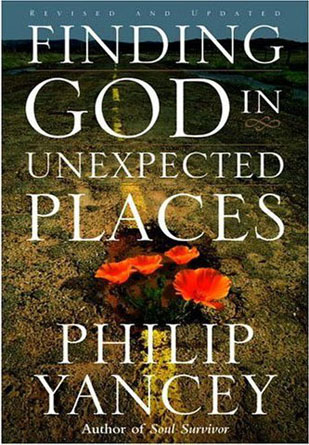
I hope you might be encouraged to look around you and find truth in unexpected places. If it is true, God is its author, and as His children in this culture, sometimes the truth can be blurred of hard to find, but it is there for those who work to pull it out! For more on this, I recommend Philip Yancey’s book Finding God in Unexpected Places. While he might not have a chapter on bumper stickers, you might be surprised where you find Him outside the walls of the church!

25 June, 2010

Drunk as a Christian

For the grace of God that brings salvation has appeared to all men, teaching us that, denying ungodliness and worldly lusts, we should live soberly, righteously, and godly in the present age.  Titus 2. 11-12 [NKJV]

No doubt; many of you will take note of this article’s title and be curious as to its contents. Not wanting to offend, I sought to word it as delicately as I could, but the purpose of this article is to spur each other on to love and good deeds (Hebrews 10. 24) in the context of Canadian culture, and I could find no better title.

As we look around at the Church, I’m afraid many of us are under a less-than-healthy influence. are you living as a drunk Christian?

Once you’ve gotten over your initial shock, I want you to think about it for a moment: We have all known a drunk person. We have all heard the word “sober”, and we ususally define that by what it is not: drunk! Well, what are the characteristics of one who is drunk: they’re not themselves, intemperate, they’re unbalanced ~ physically, mentally and chemically.

When was the last time you felt your faith and the culture around you were in balance? Admittedly, the culture is far and away an enemy to our faith. However, as you live in it ~ the seemingly unattainable ‘in but not of’ ~ have ever you struck a sense of balance between your love of God and your love of People. If these indeed are the most important commands for our Saviour, they need to be pretty essential for us as well. Granted, even when we’ve balanced them, at times it is only possible to maintain it a little while before something shifts and we’re off-centre again. Seldom, if not never, can we plateau.

This is the crux of a great book by author Kary Oberbrunner entitled The Journey Towards Relevance. He spends several chapters looking into our co-existence with the culture and uncovers our tendency toward ‘drunken faith’. In chapter nine Kary says “I think the major reason believers fail to integrate their faith with their culture is because they’re experts in culture and novices in faith.” [Page 126] That, I feel is where we go astray.


I’d like to get back to the passage from Titus which started this article. God has indeed appeared and shown us how we ought to live, making an example in the person of Jesus of how to fully love God and love others. The grace of God is a teacher, teaching us how to say “NO!” to the world’s ungodliness and lusts. It also is sufficient to teach us how one lives ‘soberly’, righteously, and godly in this culture. That word ‘sober’ we have already looked at above, but some other words can be put in its place (as have some translators of scripture). Sensibly [NASB] self-controled [NIV] wise [NLT]. Now, with some of these synonyms, do we not have a much clearer picture of the life of balance God intends for us?

But what if you don’t know what that grace is teaching us? We gladly espouse the truth of 2 Timothy 3. 16 & 17, but do we consult it when seeking to live life, make choices, or decide what to deny and what to embrace? Really? We know it is easier to talk about faith and culture than to actualy do something about it. Let’s fight the imbalance and get to know this Grace that appeared and sit as its student so we will know how to live relevant lives, truly loving God and loving others.

20 April, 2010

Press the 'Ctrl' Key on Technology

A machine in Switzerland that can replicate the Big Bang has started spinning. Talk-radio hosts take calls about how, in less than 200 years, computers and the internet will have surpassed humans and “have a mind of their own”. It seems technology is taking over.

Maybe it already has. A recent survey amongst teens shows televisions, iPods, screens, and wires are everywhere in their home, school, and social places.

Rest assured, “War of the Worlds” is not inevitable; spaceships will not come down to replace us with PCs and Macs. The Matrix does not exist! While these concepts from the news and films are far-fetched and provide entertainment, let us think about the place technology already has in our lives.

A question: What does the term “technologically devoid” mean to you? Is it a positive thing?

Contrary to popular thought, the Amish don't see anything particularly wrong with technology. They will use it in their barns, but do not let it into their homes. "Technology destroys the kind of family-life God intended us to have naturally."

CONSIDER: Technology changes life's rhythm as we sleep in, stay up late, and allow all sorts of unnatural influences into our homes.

As a result of technology:
  • We seldom get 8 hours of good sleep.
  • We sometimes expose ourselves and others to values that often shock us.  
  • We have new modes of transport and communication that have pushed us further away from each other (we are the most connected generation, but don’t know how to talk to our neighbours) and seduce us into going places we shouldn't or entertaining people and ideas we're better off ignoring.

 Some technology can start out right and end up wrong.

Who’s in control? Is there too much technology in our lives? Should we unplug sometimes? Some examples: Has the phone or a programme interrupted us from living with the people around us? Are our life problems solved in an hour as humorously and efficiently as in primetime? Television can set up an unhealthy and difficult standard we can’t match.

Perhaps you feel a little attacked. Maybe you won’t read this article because it’s not posted online! Let me offer some resolution:
Limit computer or television intake as a family. Lobby for shows and applications to make the cut; analyze your reasons through a Christian worldview, then scrutinize it and talk about what you just saw.

Use call answering as a filter. Some technology is a blessing, especially if it protects us from technology. With call display and voice mail, you choose when you allow disturbance into a life lived with significant others.

Take control!

A balanced use of technology is necessary, so that it serves us and not vice-versa. This is not un-Christian or dishonest, and you can still be culturally cool without all this technology and media influence. Christ always found ways to deal with everything important while minimizing distraction and interruption. We are challenged to do the same.

My advice: Check out your church library.  Borrow a book or movie, something to improve you or your family. Better yet, do something together as a family. Spend some time everyday being “un-plugged”.