
22 December, 2010


12 December, 2010
7 Things Christmas Confirms
[Transcript of a sermon preached at OBC on December 12th, 2010]
Shopping mall busyness and commercialism; fights with family members; stress from getting things “just right”; holiday traditions with empty meaning; relentless saccharine holiday specials on television and theatre screens; obligatory card writing and gift giving. Is this what Christmas is all about? What about the story in that play we saw last year at that church, you know, the baby in a feeding trough thing…what’s so special about a baby’s birth? Babies are messy, and eventually they grow up. What’s to celebrate about a God who would be so tyrannical that he would have an unwed, pregnant, teenage girl as part of the whole thing?
 The birth of Jesus brought joy and hope to a world where grief and pain were well-known by all. Joy was rare and seldom would last long. The announcement to the shepherds was not a disembodied wisp of religious emotion; rather it is a gladness that still resonates these 2000 years later. “Born this day in the city of David is a Saviour, which is the Christ, the LORD.”
We are told the true meaning of Christmas is “love, peace, just believing, family & Santa”. Jesus brings joy and hope to a world where grief and pain are well-known now! Celebrating the birth of Jesus, the visitation of God to earth, and not merely “love, family and Santa” will be the only method of pure peace, love, joy and hope ~ even validation ~ we will have. That is what this world really needs; not a season of empty humanistic celebration, [one can not even really know peace, love, joy and hope without Jesus] but hope and validation from its maker and God.
The fact that Jesus came, born to a woman, having no reputation, being found as a man, humbling Himself to die on a cross [Phil 2.8] so as to conquer sin and death! This is a fact so meaningful, so eloquent all the poet laureates of the world could not wholly describe it, nor all the theologians of the world fully explain it.
The birth of the Christ was not simply an event in the history of our world; there are several ways in which the incarnation rocked our world and has forever changed our past, present and future.
His coming told the world something; it declared something, confirmed something. What was it?
The great theologian A.W. Tozer has done an amazing job dissecting that something, and so I am indebted to him for much of what I share with you this morning. You see, that something is actually several things. Just as Jesus broke the loaves into pieces for greater convenience in eating them, let’s divide this something into parts in order to better understand them.
I. GOD IS REAL
There had been 400 long, quiet years between Malachi’s ending and Matthew’s beginning. The people were beginning to think God was done with them. Indeed, the heavens were opened and another world than this one came breaking in! “Glory to God in the Highest, and on earth, peace, good will”. The shepherds knew earth too well, but now they hear from God and heaven above ~ in one glorious moment the two worlds collide and there was joy! Now, God is no longer a hope, a might be ~ away with agnosticism! He is! He has made himself known!
What was available only for chosen elite, from Aaron’s line, was now manifest to common man! Such a happening only confirms …
II. HUMANITY HAS VALUE Phil. 2.7
Emerging the eternal word with human flesh redeems what was once thought dirty and base. It can not be so, or else God would not have chosen to join with it! He redeems our humanity by being one of us! While commenting on ‘the Shallow and Profound’, Oswald Chambers writes in his devotional work My Utmost for His Highest,
“Beware of posing as a profound person – God became a baby. To be shallow is not a sign of being sinful. Nor is shallowness an indication that there is no depth to your life at all – the ocean has a shore. Even the ‘shallow’ things of life, such as eating and drinking, walking and talking [even every human experience], are ordained by God. These are all things our Lord did. He did them as the Son of God.” [Matthew 10.24]Man’s creation imageo dei is positively confirmed as Jesus becomes fully man and fully God, existing in time and space truly as ‘one of us’ yet all the more whom we are to be.
Since God has redeemed our humanity by joining with it, we are loved indeed. There is not a need to fear that we are simply a step in evolution, but rather the champion of His creation. And being so, we know that …
III. HUMANKIND WILL NOT BE EXTERMINATED
That which was God seized upon that which was man. “God of the substance of the Father, begotten before all ages; Man of the substance of his mother, born in the world. Perfect God and Perfect man; though he be not two but one – the Christ! God did not visit our race to merely rescue it from Satan, but to show our race to be one that will last. Surely we will not be wiped out by nuclear war or turned into subhuman monsters through radiation or ultimately change the genetic process through evolution or fast-food or natural disasters and global warming; Jesus would not have taken upon Himself the nature of a race soon to be extinct.
If we can count this having happened, if these claims can be confirmed, then we know that our faith is as old as creation and has been in the works since that time! Christmas confirms …
IV. GOD SPOKE THROUGH THE PROPHETS John 1. 1; Hebrews 1. 1-2; 1 Peter 1. 10-12
Priests and scribes well-versed in the scriptures told Herod that the Christ must come from Bethlehem in Judaea. Thereafter, the OT comes alive in Jesus! The likelihood of any one man validating himself as Messiah against so many prophecies, over so many years, from so many prophets, in so many areas and times is impossible unless it truly was intentional and of God!
His coming confirmed both the veracity of Old Testament scripture and the soundness of His own claims and actions.
Jesus coming as a baby was not the end. He came that he might die. In doing that, we can reason …
V. WE ARE LOST, BUT NOT ABANDONED GALATIANS 4. 4-7
Had we not been lost, we would not have needed a saviour; a guide to show us the way back. If we had then been abandoned, no saviour would have come. But He came. This establishes that God has concern for us. We might have sinned away every shred of merit, still he does not forsake us; He has descended so that we might ascend!
Yes, we can find our way back, but through anything we would do ourselves – Jesus is the way! In finding our way through Him, we have confidence that we were made for more; this is not all there is.
VI. THIS WORLD IS NOT THE END JOHN 14. 2
When He was here, Jesus spoke with cheerful certainty of the world to come. He reported on the things He had seen and knew were to come. We are made not for this world, but for the one to come; as surely as we inhabit this one, we are sure to inhabit another.
So if this world is not it, if indeed our saviour God has come to rescue us, to give us value and hope, then we can lastly affirm that …
VII. DEATH WILL ONE DAY BE DETHRONED AND LIFE WILL RULE
Read I John 3. 8 and consider: What is the devil’s chief victory, if not convincing a great many people that he is not real nor a threat, but that he held us in sin and the grip of death? But now, life is made manifest by the appearing of our saviour Jesus who has abolished sin and death and has brought life and immortality to light through the Gospel. He has rescued us from our captor and sealed his doom!
15 October, 2010
Bumper Sticker Truth
To [those] who had believed him, Jesus said, "If you hold to my teaching, you are really my disciples. Then you will know the truth, and the truth will set you free." John 8.31-32 (TNIV)
"Jesus loves you…everyone else thinks you're a loser". Even if this true of your life, while the intent of such a sticker is intended to put down the reader [and, inadvertently devalue Jesus] our value ought to be found in Jesus thoughts of us. Despite the “authorial intent”, it really is a good sticker: All that really matters is the fact that the sinless son of God would love you ~ and die for you ~ that’s incredible. He is the only one we would want to love us, and by living in his love, we will become loveable to others! So, who cares what the driver of that car thinks?!
 I hope you might be encouraged to look around you and find truth in unexpected places. If it is true, God is its author, and as His children in this culture, sometimes the truth can be blurred of hard to find, but it is there for those who work to pull it out! For more on this, I recommend Philip Yancey’s book Finding God in Unexpected Places. While he might not have a chapter on bumper stickers, you might be surprised where you find Him outside the walls of the church!
Being one who loves autumn and all its colour, I enjoy a drive almost anywhere this time of year; be it a long drive in the country or merely to the store for an errand, I like to look around at God’s beauty about me.
When you’re looking around so much, you’re bound to notice things.
It was during a drive the other week between the chapel and home when something caught my attention ~ but it was nothing autumnal specifically. I had merely read the bumper
sticker on the car in front of me while stopped at the light. In big cursive letters it read “Jesus Loves you” and the cockles of my heart were warmed. Upon further study of the sticker, I noticed it had a sub-line written in plainer and smaller letters which said “…but everyone else thinks you’re a loser”. Needless to say my cockles froze back up!
As the light turned green, I was left thinking through the statement on that sticker and found myself experiencing a few different emotions; as the initial funk and frustration at having read the sticker [and the various condemnations and judgements I passed upon the driver] began to subside I found a new sense of my heart warming again.
"Jesus loves you…everyone else thinks you're a loser". Even if this true of your life, while the intent of such a sticker is intended to put down the reader [and, inadvertently devalue Jesus] our value ought to be found in Jesus thoughts of us. Despite the “authorial intent”, it really is a good sticker: All that really matters is the fact that the sinless son of God would love you ~ and die for you ~ that’s incredible. He is the only one we would want to love us, and by living in his love, we will become loveable to others! So, who cares what the driver of that car thinks?!
While I didn’t see this particular sticker during my drive home that day, another one comes to mind which maybe you have seen in your travels: What about "if you can read this you're following too close" on the back of a car written really small? It is a tongue in cheek comment on the fact that we are to be considerate when driving and not tail-gate. I find the following encouragement from Paul to be implicit within such a bumper-sticker: "Do nothing out of selfish ambition or vain conceit. Rather, in humility value others above yourselves, not looking to your own interests but each of you to the interests of the others." Philippians 2. 3-4 (TNIV)
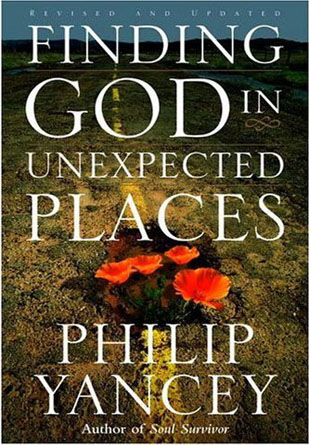 I hope you might be encouraged to look around you and find truth in unexpected places. If it is true, God is its author, and as His children in this culture, sometimes the truth can be blurred of hard to find, but it is there for those who work to pull it out! For more on this, I recommend Philip Yancey’s book Finding God in Unexpected Places. While he might not have a chapter on bumper stickers, you might be surprised where you find Him outside the walls of the church!
25 June, 2010
Drunk as a Christian
For the grace of God that brings salvation has appeared to all men, teaching us that, denying ungodliness and worldly lusts, we should live soberly, righteously, and godly in the present age. Titus 2. 11-12 [NKJV]
No doubt; many of you will take note of this article’s title and be curious as to its contents. Not wanting to offend, I sought to word it as delicately as I could, but the purpose of this article is to spur each other on to love and good deeds (Hebrews 10. 24) in the context of Canadian culture, and I could find no better title.
As we look around at the Church, I’m afraid many of us are under a less-than-healthy influence. are you living as a drunk Christian?
Once you’ve gotten over your initial shock, I want you to think about it for a moment: We have all known a drunk person. We have all heard the word “sober”, and we ususally define that by what it is not: drunk! Well, what are the characteristics of one who is drunk: they’re not themselves, intemperate, they’re unbalanced ~ physically, mentally and chemically.
When was the last time you felt your faith and the culture around you were in balance? Admittedly, the culture is far and away an enemy to our faith. However, as you live in it ~ the seemingly unattainable ‘in but not of’ ~ have ever you struck a sense of balance between your love of God and your love of People. If these indeed are the most important commands for our Saviour, they need to be pretty essential for us as well. Granted, even when we’ve balanced them, at times it is only possible to maintain it a little while before something shifts and we’re off-centre again. Seldom, if not never, can we plateau.
![]() This is the crux of a great book by author Kary Oberbrunner entitled The Journey Towards Relevance. He spends several chapters looking into our co-existence with the culture and uncovers our tendency toward ‘drunken faith’. In chapter nine Kary says “I think the major reason believers fail to integrate their faith with their culture is because they’re experts in culture and novices in faith.” [Page 126] That, I feel is where we go astray.
I’d like to get back to the passage from Titus which started this article. God has indeed appeared and shown us how we ought to live, making an example in the person of Jesus of how to fully love God and love others. The grace of God is a teacher, teaching us how to say “NO!” to the world’s ungodliness and lusts. It also is sufficient to teach us how one lives ‘soberly’, righteously, and godly in this culture. That word ‘sober’ we have already looked at above, but some other words can be put in its place (as have some translators of scripture). Sensibly [NASB] self-controled [NIV] wise [NLT]. Now, with some of these synonyms, do we not have a much clearer picture of the life of balance God intends for us?
But what if you don’t know what that grace is teaching us? We gladly espouse the truth of 2 Timothy 3. 16 & 17, but do we consult it when seeking to live life, make choices, or decide what to deny and what to embrace? Really? We know it is easier to talk about faith and culture than to actualy do something about it. Let’s fight the imbalance and get to know this Grace that appeared and sit as its student so we will know how to live relevant lives, truly loving God and loving others.
No doubt; many of you will take note of this article’s title and be curious as to its contents. Not wanting to offend, I sought to word it as delicately as I could, but the purpose of this article is to spur each other on to love and good deeds (Hebrews 10. 24) in the context of Canadian culture, and I could find no better title.
As we look around at the Church, I’m afraid many of us are under a less-than-healthy influence. are you living as a drunk Christian?
Once you’ve gotten over your initial shock, I want you to think about it for a moment: We have all known a drunk person. We have all heard the word “sober”, and we ususally define that by what it is not: drunk! Well, what are the characteristics of one who is drunk: they’re not themselves, intemperate, they’re unbalanced ~ physically, mentally and chemically.
When was the last time you felt your faith and the culture around you were in balance? Admittedly, the culture is far and away an enemy to our faith. However, as you live in it ~ the seemingly unattainable ‘in but not of’ ~ have ever you struck a sense of balance between your love of God and your love of People. If these indeed are the most important commands for our Saviour, they need to be pretty essential for us as well. Granted, even when we’ve balanced them, at times it is only possible to maintain it a little while before something shifts and we’re off-centre again. Seldom, if not never, can we plateau.

I’d like to get back to the passage from Titus which started this article. God has indeed appeared and shown us how we ought to live, making an example in the person of Jesus of how to fully love God and love others. The grace of God is a teacher, teaching us how to say “NO!” to the world’s ungodliness and lusts. It also is sufficient to teach us how one lives ‘soberly’, righteously, and godly in this culture. That word ‘sober’ we have already looked at above, but some other words can be put in its place (as have some translators of scripture). Sensibly [NASB] self-controled [NIV] wise [NLT]. Now, with some of these synonyms, do we not have a much clearer picture of the life of balance God intends for us?
But what if you don’t know what that grace is teaching us? We gladly espouse the truth of 2 Timothy 3. 16 & 17, but do we consult it when seeking to live life, make choices, or decide what to deny and what to embrace? Really? We know it is easier to talk about faith and culture than to actualy do something about it. Let’s fight the imbalance and get to know this Grace that appeared and sit as its student so we will know how to live relevant lives, truly loving God and loving others.
20 April, 2010
Press the 'Ctrl' Key on Technology
A machine in Switzerland that can replicate the Big Bang has started spinning. Talk-radio hosts take calls about how, in less than 200 years, computers and the internet will have surpassed humans and “have a mind of their own”. It seems technology is taking over.
Maybe it already has. A recent survey amongst teens shows televisions, iPods, screens, and wires are everywhere in their home, school, and social places.
Rest assured, “War of the Worlds” is not inevitable; spaceships will not come down to replace us with PCs and Macs. The Matrix does not exist! While these concepts from the news and films are far-fetched and provide entertainment, let us think about the place technology already has in our lives.
A question: What does the term “technologically devoid” mean to you? Is it a positive thing?
Contrary to popular thought, the Amish don't see anything particularly wrong with technology. They will use it in their barns, but do not let it into their homes. "Technology destroys the kind of family-life God intended us to have naturally."
CONSIDER: Technology changes life's rhythm as we sleep in, stay up late, and allow all sorts of unnatural influences into our homes.
As a result of technology:
- We seldom get 8 hours of good sleep.
- We sometimes expose ourselves and others to values that often shock us.
- We have new modes of transport and communication that have pushed us further away from each other (we are the most connected generation, but don’t know how to talk to our neighbours) and seduce us into going places we shouldn't or entertaining people and ideas we're better off ignoring.
Some technology can start out right and end up wrong.
Who’s in control? Is there too much technology in our lives? Should we unplug sometimes? Some examples: Has the phone or a programme interrupted us from living with the people around us? Are our life problems solved in an hour as humorously and efficiently as in primetime? Television can set up an unhealthy and difficult standard we can’t match.
Perhaps you feel a little attacked. Maybe you won’t read this article because it’s not posted online! Let me offer some resolution:
Limit computer or television intake as a family. Lobby for shows and applications to make the cut; analyze your reasons through a Christian worldview, then scrutinize it and talk about what you just saw.
Use call answering as a filter. Some technology is a blessing, especially if it protects us from technology. With call display and voice mail, you choose when you allow disturbance into a life lived with significant others.
Take control!
A balanced use of technology is necessary, so that it serves us and not vice-versa. This is not un-Christian or dishonest, and you can still be culturally cool without all this technology and media influence. Christ always found ways to deal with everything important while minimizing distraction and interruption. We are challenged to do the same.
My advice: Check out your church library. Borrow a book or movie, something to improve you or your family. Better yet, do something together as a family. Spend some time everyday being “un-plugged”.
17 March, 2010
St Patrick: separating the man from the myth.
Just in time for what is usually an annual beer-fest and pseudo-Irish celebrations, I thought I would shed a little light on the patron saint of the emerald isle.
The following video is a nice place to start: http://www.youtube.com/watch?v=6TCB5QhHVJA
However, if you'd care to read it, the following is a paper I wrote on St Patrick:
Every March 17th, in cities and towns across North America, people flock to the nearest Irish pub, dressed green all over, trading their nationality for an Irish one just to enjoy a few pints of green beer, watch a parade, and sing ‘O’ Danny Boy’ to honour a saint some 1,500 years ago.
St Patrick is one of three of the most popular of all saints; recognised world wide along with St Nicholas and St Valentine. However, his character and story, as with Nicholas and Valentine, seem clouded in mystery and fable. Mythopoeia in nature, stories of his chasing snakes from Ireland and using a shamrock to explain the Trinity come out every March 17th as the world celebrates his feast day. It will be the intent of this paper to uncover the true St Patrick and explain why he is worthy of remembrance and admiration.
In order to learn about and better understand the man behind the myth, one must ask several questions of the subject. Using his only surviving writings and works from specialists in Celtic history and the Irish church this paper will discuss several aspects. a) Patrick’s personal background and history. b) Who Patrick was as a person and his theology. c) What he did for Ireland and the Church during his time. d) How he has become known and why. e) Lastly, a consideration of the importance and impact he has for study and life in the Church today.
Realising the unknown about the past and the fact this ‘saint’ was human, different perspectives are taken into account. After such an evaluation, it should be clearer who this fifth century saint was.
Fortunately, for the student of St Patrick, he has written somewhat of an autobiography in his Confession. Discussion of this work develops later, but to address it now for some introductory information is helpful. The exact place and time of St Patrick’s birth is something unknown with certainty. However, the evidence from his own writings suggest he is born near the village of Bannavem Taburniae , but it is not precise and has no modern day equivalent. It can be said that he was born in Britain in what is perhaps now Wales, but noting in the fourth century it was a Roman Britain and very much not what is understood as the Britain of modernity. The best argument for a date sets it between the years 387-90, though some historians put it much later. He is born to parents Calpornius, a deacon, and Concessa his wife. His given name, ‘Patricius Magonus Sucatus’ honours the customs and relationships of the time . What his life was like during his first 15 years is the realm of conjecture, but Patrick does allude to being brought up in a well-to-do lifestyle where the religion of his father as deacon and grandfather as priest was not truly known to him (Conf. 1). Other commentators and biographers will draw from Irish Annals and the like what is known about his father or that time, but due to Patrick’s silence, not much is certain. In his Confession He speaks of only one unknown sin committed in an hour when he is 15, an act he privately confesses to a friend, and then says nothing until his kidnapping when he is 16.
It is this kidnapping along with thousands of others that Patrick attributes as God’s punishment for his lack of faith and obedience to Him (Conf. 1). Not much is known from his works about all that happened in his captivity, but we can deduce he was made to work for King Neill at herding sheep and spent long days and nights alone.
This captivity is crucial in his life. It is a time when God does a work in his heart and mind. Patrick tells us how, with so much time alone with his thoughts, he would pray hundreds of times a day and night, as God opened his unbelief and showed him his sin and His salvation. The captivity lasted approximately six years until he had a dream and heard a voice telling him that he must escape and return to his homeland. Boarding a ship, he made the long trek home.
Patrick’s escape was an adventurous time. He helped his shipmates when the food was gone to pray to God for provision. An approximate chronology of events from his escape, (411) to the time when Patrick is consecrated as Bishop (432) covers time at Lerins before getting back to Britain. Then there is study at the monastery in Auxerre where he is ordained. It is at Auxerre where he spends several years as deacon before he is sent to Ireland by Germanus, (a bishop) . Seeming to fast-forward several points, Patrick comes to Ireland through a calling from God (Conf. 3).
He does not come to a land without any Christian influence already there. Palladius is first sent to Ireland as Bishop, but was killed after one year of mission. It is important to know Patrick built upon the existing, weak Christian church. Patrick came not to battle heresy or Pelagianism, but to further the Church of Rome. As a result of his work, Ireland came into connection with the rest of the Roman Empire and made part of universal Christianity. He helped to convert more of the west than was previously reached, something that would otherwise have failed in Ireland due to paganism’s predominance. As well, he helped to organise the existing church, secured its permanence, and introduced Latin along with Roman culture, literature and ideas to the Irish, which allowed them to eventually increase their worldview and status in the world.
Many of the stories perpetuated about Patrick’s work in Ireland are either untrue or unreliable. There is not a mentioning of teaching the doctrine of the trinity through using a shamrock, nor is there report of chasing snakes out of Ireland. Surely if he had done so, he would have written of it himself in the confession.
Most of his ministry in Ireland is understood from the perspective of a biographer or, in the case of Patrick’s earliest accounts, save his own writings, hagiography. Muirchu and Tirechan of the 7th and 8th centuries are the first men to write a ‘Life of Patrick’ but have both been found unreliable. Patrick’s efforts seem to have good affects and be unchallenged, but some event originating in Britain brings controversy to Patrick’s life and gives purpose for his writing his two major works. No one can say when the event occurs, but late in his ministry, the prince Coroticus came to the Irish coast and ruthlessly raided many of Patrick’s recent converts. Patrick writes a strong letter of rebuke to the man who murdered his converts and seeks to save the ones that are still alive. The letter has a similar tone as his later work, the Confession, in that there is much in he way of defence and theology explicit throughout. He urges Christians to shun those having to do with the atrocity; he seeks repentance from Coroticus and excommunicates them who carried it out.
The Confession is primarily an apologetic, but the reason given by Patrick himself is that it is to render thanksgiving to God for His hand in Patrick’s life. Agreement across the board by all biographers is that Patrick writes as one who knows his Bible, the Latin Bible, and his lack of knowledge with literacy and rhetoric is obvious in his writing of these works. At times he will simply quote scripture at the risk of overstating his point simply because he will rely upon it for wording and communication. At times, it is to express his authority as bishop. Notwithstanding, Patrick’s humility comes though on every page as he speaks of his lowly state and position before God and how unlearned he is. As for the popular ‘Lorica’, or ‘Breastplate of St Patrick’, it is wrongly recognised as his. Due to its dating centuries after Patrick, the Latin used is also unlike the raw Latin of the Confession or Letter.
Patrick has greatly influenced the church through his acts of holiness and leaving behind his two small works. The importance of studying him today is due to his openness within those works; we feel we can truly know him because of his frankness. It can help us to understand Ancient Christian Britain and we are able to see character in his humility, the shortcomings that he does not hide, but pursues God’s call all the same. We can follow his journey as a young boy kidnapped, serving his master, escaping back to his homeland and returning as bishop to his captors eventually giving his life to them as he establishes God’s Kingdom there
Patrick died in 461 in Ireland in the county of Saul, though he longed to return to the church he founded in Armagh to rest. A man of integrity, compassionate to the people he ministered amongst; his story is one of inspiration. Fortunately, he left behind an imperishable memorial, his Confession, helping separate man from myth.
SELECTED BIBLIOGRAPHY
Bury, John B. The Life of St Patrick and His Place in History. Mineola, NY: Dover Publications, Inc., 1905
Cathcart, William. The Ancient British and Irish Churches: Including the Life and Labours of St Patrick. Philadelphia: American Baptist Publication Society, 1894
Chadwick, Nora K. The Age of the Saints in the Early Celtic Church. London: Oxford University Press, 1961
Gallico, Paul. The Steadfast Man: A Biography of St Patrick. Garden City, NY: Doubleday & Co, Inc. 1958
Gonzalez, Justo L. The Story of Christianity Volume 1: The Early Church to the Dawn of the Reformation. New York: HarperCollins Publishers, 1984.
Hanson, R.P.C. The Life and Writings of the Historical Saint Patrick. NY: Seabury Press, 1983
McNeill, John T. The Celtic Churches: A History, A.D. 200 to 1200. Chicago: University of Chicago Press, 1974
Olsen, Ted. Christianity and the Celts. Downers Grove, IL: Intervarsity Press, 2003
Vann, Father Joseph, ed. Lives of Saints. New York: John J. Crawley & Co., Inc., 1954.
11 February, 2010
Deception, Trickery and Other Popular Forms of Reaching Out.
C.S. Lewis writes:
"Even in literature and art, no man who bothers about originality will ever be original: whereas if you simply try to tell the truth (without caring twopence how often it has been told before) you will, nine times out of ten, become original without ever having noticed it."
I believe he is right. For years when I started out in this ministry, I thought I had to repackage and re-invent things so I could be just as effective and popular as the next guy. I was frequently trying to put my own spin on things so I might appear clever or original. I have discovered now that as I try less and give to God more, all the while being honest with what I offer Him and others ~ no strings attached ~ God blesses it and it does become original enough to strike someone in a way they hadn't thought of before.
I agree with another great philosopher in saying that "there is nothing new under the sun" and that our message is a couple millenia old, but one would be surprised at the constant effort made to soft-soap, water-down or manipulate the message ~ or others ~ in order to be effective in conveying it.
Example: Come out to this really fun event with pizza, friends, music and games ... then once we've lured you in we'll hit you with the Gospel! Be my firend so I might have an opportunity to share this tract with you.
I think authenticity and consistency in living a message of reconciliation and redemption is the most effective and truly God-ordained method of outreach.
People can see through slick programmes and projects, rallies and tracts are declining in results (even using that word I cringe, because that is what it has become: results driven); we've done them for years and they are becoming increasingly inefficient.
Now that I have said so and effectively "thrown down the gauntlet", please pray for me to be consisent and authentic "as I go". And read Paul's thought and defence here: I Thessalonians 2. 3-5.
Subscribe to:
Posts (Atom)