04 December, 2011

What is Your Hope This Christmas?

Transcript of a sermon delivered December 4th, 2011 at OBC

On the Polar Express the children sing and talk of whether one believes and the special “magic” or experiences that await such believers. The hope the main character has is all for meeting a man in a red suit in the North Pole; this comes when all hope is fading that this man is even real. He is taken on the train ride of his life and does meet Santa and receive, from him, a special gift of a bell that only rings for those who believe. At the film’s end, the voice-over of the character as a man states the bell still rings for him always while its sounds fade for many in his life.

“Imagine a place you have to believe to see”.

What exactly is the magic or the spirit of Christmas? Whatever it is, in movies I have seen it bring dead dogs to life, grow a Grinch’s heart, take trains down icy hills safely, give men a glance at alternate lives they would live, and get a department store clerk to marry an elf!

It is all very distracting from that for which our hearts are really hoping, longing, groaning. It seems to set up a hope for something, implies it exists if we “just believe”, but reality sets in to let you know “it’s only a story” and we’re disappointed. It ends that the hope is a humanistic aspiration to fulfil that hope.

This is not a new phenomenon. Well before Christmas was cemented on our calendars, people were chasing false hope. In the first century, people were setting their hope in their citizenship, in their possessions and their abilities/accomplishments. They were placing hope in their leader, spreading the gospel of a Caesar who couldn’t save; who ultimately oppressed them and left a legacy of war and pride.

During this time, however, a small boy was born who was foretold to bring the promises of a nation to fulfillment; and He was a blessing not only for that nation, but for the whole world.

This Man grew, He began to identify Himself with the prophecies in ancient writ and He spoke as one with authority. He invaded people’s lives; never to be the same. He challenged the people’s hopes and pointed to Himself as the embodiment of Hope, giving people real reason to look beyond themselves and others for completion and reconciliation. He made a lot of statements that put Him out of the realm of being only a man and did things that often surprised, confused and even angered witnesses; he created quite a stir and He generated quite a following.

The great thing is He made good on all the promises He gave … even promises that were written in their Holy Books. And when He left, He left the world with the most complete sense of victory and the hope and promise of a new life to come; a new life that can begin here and now!

Have you placed Hope in Hope itself? Are you waiting for something to happen that is outside of your control, but desperately grasping for the steering wheel of your life, thinking you can do a better job? Do you long for something that is always beyond your reach but not really know what it is? Or worse yet: do you chase something only to have it later and then realise it does not satisfy, so you move on to something or someone else? It is difficult in this life to see the benefit of living in a hope that is promised beyond this life. So we are often content to be the captain of our own destiny; and when we do, there is always a promise out there ready to take us deeper into ourselves and away from the One who truly gives hope.

The Polar Express and so much of what is fed to us over the Holidays offer a Christ-less hope and, therefore, can not really deliver on the promises made. They take what is wholly intended as a celebration of rescue, of love and hope and feed you empty-calorie optimism that only leaves you hungrier. People and things let us down and dash our hopes daily. Yet with God, He is faithful to keep His promises, so we can hope in Him. His track record shows He is trust-worthy, so when he offers hope for this life and the one to come, one would be a fool not to take it! That is just what a “fool” is: one who has failed to recognise the sovereignty of God over all of life; here and after. Should not the One who made us know what we require and be the One in whom we hope?

Do you live life with that as your Hope? Are you distracted by the desires of the society and what the culture tells you are worth your hope? Are you a Christian this morning, and have substituted the Gospel of Hope for a Polar Express Promise?

Hope is found in Christ and in His resurrection; the promise of new life in heaven.

A life lived in such hope is satisfying and will be satisfied. Come with me; let us be awakened by the scripture this morning as we discuss Hope …

Hope is Worth Boasting in & Suffering for [Rom 5. 2-5; 8. 18] 
Boasting; celebrating the believers hope in resurrection ~ foreshadowed for us in Jesus on Easter morning. The term “rejoice” is often used to translate it here; but ‘boast’ better conveys the strength and confidence intended.

Why do we boast, when do we do it? When we have a sure confidence in something. Often our boasting is misplaced onto something temporal and limited, something that doesn’t satisfy and is self-serving, thus it is given its pejorative use throughout the NT, but herein lies proper boasting: Christ’s work on the cross and wilful exit from the tomb conquered sin’s power, worked death backwards and wrestled free the Devil’s stranglehold on us and secures us a place in heaven with rockin’ new spirit bodies ~ something definitely to brag on!

The bad news: it comes with suffering. The wicked prosper, persecution continues, bearing with the pains of sin-marred creation in people and the world, the decay of our bodies; we suffer indeed and may be tempted to give up. But we see so little down here [I Cor 13.12] …that’s why He came, at Christmas, to show us the way back to Eden. No suffering compares to that! “The glory to come far outweighs the affliction of the present. The [hardship] is light and temporary when compared to the all-surpassing and everlasting glory.” F.F. Bruce, TNTC, 159

Why are we boasting and confident? Why endure the suffering? We celebrate the fact that its impact is eternal and universal.

Hope Has Saved Us & the World [Romans 8.20-25]

The subject matter of Romans 8 is all about this present period of hope – the time between Jesus’ first and second comings!

Our full enjoyment of the salvation awaits us in the future, so we cling to it; white knuckled. “But it is not only the people of God that have this hope of glory. [what an awesome creator] All creation, says Paul, is waiting [with bated breath and with moans] for the day when the sons of God will be manifested in glory.” F.F. Bruce, TNTC, pg.160   That is when the earth too will be restored to its original glory.

Here is how boasting and suffering is part of the saving; ch. 5& 8 bookend one another.  Between these chapters, Paul makes a huge point: The climax in God’s plan is both for his people and for creation generally. Since we have not reached that climax, we must eagerly and patiently wait for it ~ so he gave us the ability to hope!
We see Hope is a cause for rejoicing and consolation for our trials, that the inevitable salvation is going to be awesome and globally inclusive…but that is the now; what do we do in the meantime? How does Hope help me now?

Hope Purifies Us, Already and Not Yet [1 John 3.2-3] Charles Dickens’ Christmas Carol is a picture of one who has seen the outcome of his life early and, when given a chance of hope, takes it to purify himself; now that’s a Christmas movie!

John here, along with the whole counsel of scripture, agrees with Paul that what the Christ has accomplished impacts us beyond the space-time continuum.

John expresses here the thrust of that which is capitulated in Romans: that we are the children of God. Yes, Now. But we also will be as the Son of God, when He returns and we see Him as He is … so until that time, we purify ourselves. We do/say/think those things which align us with the commands of God in order to purify our lives from that which is not in keeping with who we will be.

Scrooge is the negative outworking of this text, but we see the effect the Gospel has on him. He turned his mind to things above.

The key to real hope rests in the discipline of setting our minds on things above, not here: Colossians 3.1-2. That is where Christ is, and it is where we too will be … Do you have such hope this Christmas?
The hope of Christmas is truer than anything the world offers us at this time of year. Don’t misunderstand me: I like Christmas and would hearten you to enjoy family & friends, gifts, singing, egg nog and the movies; so as long as you see them all through the filter of the-messiah-in-a-manger you will enjoy them properly. Since God is in control, we needn’t fear the future; His promises are sure and they make the future bright ~ God came to us, lived for us, died for us and rose again to give us hope. Hope of eternal life in His true Kingdom, sealing the deal with His Spirit. This hope is something to boast about, to suffer for; it saves us and purifies us.

The Polar Express can’t deliver that.

29 April, 2011

Hell; No?


“…there will be false teachers among you. They will secretly introduce destructive heresies, even denying the sovereign Lord who bought them—bringing swift destruction on themselves” 2 Peter 2:1 (TNIV).

Pastor/author/post-modern rock star preacher Rob Bell has once again stirred us all to reconsider the faith we hold dear; this time in the realm of the afterlife. Love Wins: a Book about Heaven, Hell, and the Fate of Every Person Who Ever Lived hit shelves at the end of March and instantly became a best seller.

I took it up to read and discovered more questions than answers as he deals too quickly and emotionally with the subject matter and makes some large jumps biblically and theologically. There is an argument here for a post-death second-chance salvation in which the majority of humans will be won over by God's love. Oh, and no real Hell, either.

How does one handle a book like this? I hope to help you interact and discern what is in our Canadian – even church – culture.

Many people have spoken up in response to his book; on the news, in periodicals, and all over the blogosphere. I do not have the space to engage the conversation fully, but in the end, scripture will be our guide through the mire. Theologian and writer Denny Burk has given some biblical foundation with which we might discern the book’s message, summarized below:

The New Testament teaches that Jesus only saves (John 14:6; Acts 4:12). If someone does not believe in Jesus, they fall under God’s judgement (John 3:18). Any refusal of Christ alone for salvation means we die in our sin and cannot follow Jesus to eternal life (John 8:21). Yes, most people will choose the wide path of destruction and a few will choose the narrow path to life (Matthew 7:13-14; Luke 13:23-28). However, there will be “a great multitude that no one could count, from every nation, tribe, people and language, standing before the throne and in front of the Lamb.” (Revelation 7:9). The problem is our sin - and sin is serious. God is storing up His anger for “stubborn and unrepentant” sinners (Romans 2:5-11). It will be a terrifying thing to fall into the hands of an angry God at the judgement (Hebrews 10:26-31).

As to Bell’s implication that those who die without Christ will have another chance beyond the grave, we can learn from passages like 2 Corinthians 5:10, Hebrews 9:27, and Revelation 20:11-15 that there will be an accounting for how we spent our lives and the choices and actions we made - or failed to make - in this life. We die once, face judgement, a verdict is found, and there will be separation and “second death” for those whose names are not found in the Book of Life.

There is more that could be discussed in a review of this book, but this is a starting place. And we must start, because these issues are the core of our faith. Rob has called salvation, the Gospel, and even God Himself to task and has challenged us to rethink our eschatology. Our theology impacts more than the church we attend, but our worldview and the way we interact in it. I would love to discuss this topic further and what it means for us as we seek to Exalt: Equip: Engage.

18 January, 2011

Seeing Life in 3-D

I am your servant; give me discernment that I may understand your statutes. Psalm 119.125 (TNIV)

It seems these days that in order for a film to do well, they feel the need to release it in “3-D”. I guess we didn’t learn in the 60’s. This trend is coming back with films like Avatar, Journey to the Centre of the Earth, and the latest Narnia film all being released in 3-D. You have to pay extra and wear those ridiculous glasses to see a minimal difference from the 2-D experience you have enjoyed for years – all so the story writers can have someone pull a cheap gag like throwing water into the audience as we gasp! After the film is through, you throw the glasses back into a box at the exit and wait for the next film to be released.

What we really need is a pair of those glasses that would help the way we see - or rather interpret - the world. It’s not just films that could benefit from a 3-D enhancement.

As I consider this article, one area that continually rises to the surface is our media saturated culture. From the films we watch, the programmes we follow, the songs we hear, the articles we read, right down to the conversations of which we are a part, I would like to introduce you to a set of “3-D glasses” you can always wear for everything you contact in media.

The Centre For Parent-Youth Understanding in Elizabethtown, PA has put out an excellent and simple resource for parents, teens -- any discerning individual – to use in understanding the message inherent in our culture. It’s a way to “use your head to guard your heart”; they outline it as follows:

3 Media evaluation Steps … Discover; Discern: Decide

In step one, we seek to learn [Discover] what is underneath; what are the messages, assumptions and the worldview of the film/song/book/person with which we are engaging. Second, we then compare those messages against those of a biblical world and life view [Discern]. Last, you then choose [Decide} what to do with the song/book/film/friend. If we can seek to use such a simple process for discerning our media, then we are in control of it [subject to God] and not the other way around. It is the tendency for us to suspend our disbelief and be entertained; we should “always be ready’” [1 Peter 3.15] and choose to dwell on the influences that will ultimately benefit us and eternity. [Phil 4.8]

Along with putting this 3-D guide to use, bear in mind the excellent book by Brian Godawa titled Hollywood Worldviews: Watching Films with Wisdom and Discernment from IVP; let it be a further aide as you interact with the media around you, regarding the film world in particular, this month. Despite its date [1996], he has done a great job of exposing some of the philosophies that are rampant in the films we still watch, yet helps us to better understand the God we worship, encouraging us to “watch movies with your eyes wide open”.

I feel, coupled with the 3-D guide as well as Brian’s thorough and provactive treatment of the film world, we as Christian are equipped to set our minds to heaven as we consider what our culture offers us.

12 December, 2010

7 Things Christmas Confirms

[Transcript of a sermon preached at OBC on December 12th, 2010]

Shopping mall busyness and commercialism; fights with family members; stress from getting things “just right”; holiday traditions with empty meaning; relentless saccharine holiday specials on television and theatre screens; obligatory card writing and gift giving. Is this what Christmas is all about?  What about the story in that play we saw last year at that church, you know, the baby in a feeding trough thing…what’s so special about a baby’s birth? Babies are messy, and eventually they grow up. What’s to celebrate about a God who would be so tyrannical that he would have an unwed, pregnant, teenage girl as part of the whole thing?


The birth of Jesus brought joy and hope to a world where grief and pain were well-known by all. Joy was rare and seldom would last long. The announcement to the shepherds was not a disembodied wisp of religious emotion; rather it is a gladness that still resonates these 2000 years later. “Born this day in the city of David is a Saviour, which is the Christ, the LORD.”

We are told the true meaning of Christmas is “love, peace, just believing, family & Santa”. Jesus brings joy and hope to a world where grief and pain are well-known now! Celebrating the birth of Jesus, the visitation of God to earth, and not merely “love, family and Santa” will be the only method of pure peace, love, joy and hope ~ even validation ~ we will have. That is what this world really needs; not a season of empty humanistic celebration, [one can not even really know peace, love, joy and hope without Jesus] but hope and validation from its maker and God.

The fact that Jesus came, born to a woman, having no reputation, being found as a man, humbling Himself to die on a cross [Phil 2.8] so as to conquer sin and death! This is a fact so meaningful, so eloquent all the poet laureates of the world could not wholly describe it, nor all the theologians of the world fully explain it.

The birth of the Christ was not simply an event in the history of our world; there are several ways in which the incarnation rocked our world and has forever changed our past, present and future.

His coming told the world something; it declared something, confirmed something. What was it?

The great theologian A.W. Tozer has done an amazing job dissecting that something, and so I am indebted to him for much of what I share with you this morning. You see, that something is actually several things. Just as Jesus broke the loaves into pieces for greater convenience in eating them, let’s divide this something into parts in order to better understand them.

I. GOD IS REAL
There had been 400 long, quiet years between Malachi’s ending and Matthew’s beginning. The people were beginning to think God was done with them. Indeed, the heavens were opened and another world than this one came breaking in! “Glory to God in the Highest, and on earth, peace, good will”.  The shepherds knew earth too well, but now they hear from God and heaven above ~ in one glorious moment the two worlds collide and there was joy! Now, God is no longer a hope, a might be ~ away with agnosticism! He is! He has made himself known!

What was available only for chosen elite, from Aaron’s line, was now manifest to common man! Such a happening only confirms …

II. HUMANITY HAS VALUE Phil. 2.7

Emerging the eternal word with human flesh redeems what was once thought dirty and base. It can not be so, or else God would not have chosen to join with it! He redeems our humanity by being one of us! While commenting on ‘the Shallow and Profound’, Oswald Chambers writes in his devotional work My Utmost for His Highest,
“Beware of posing as a profound person – God became a baby. To be shallow is not a sign of being sinful. Nor is shallowness an indication that there is no depth to your life at all – the ocean has a shore. Even the ‘shallow’ things of life, such as eating and drinking, walking and talking [even every human experience], are ordained by God. These are all things our Lord did. He did them as the Son of God.” [Matthew 10.24]
 Man’s creation imageo dei is positively confirmed as Jesus becomes fully man and fully God, existing in time and space truly as ‘one of us’ yet all the more whom we are to be.

Since God has redeemed our humanity by joining with it, we are loved indeed. There is not a need to fear that we are simply a step in evolution, but rather the champion of His creation. And being so, we know that …

III. HUMANKIND WILL NOT BE EXTERMINATED

That which was God seized upon that which was man. “God of the substance of the Father, begotten before all ages; Man of the substance of his mother, born in the world. Perfect God and Perfect man; though he be not two but one – the Christ! God did not visit our race to merely rescue it from Satan, but to show our race to be one that will last.  Surely we will not be wiped out by nuclear war or turned into subhuman monsters through radiation or ultimately change the genetic process through evolution or fast-food or natural disasters and global warming; Jesus would not have taken upon Himself the nature of a race soon to be extinct.

If we can count this having happened, if these claims can be confirmed, then we know that our faith is as old as creation and has been in the works since that time! Christmas confirms …

IV. GOD SPOKE THROUGH THE PROPHETS John 1. 1; Hebrews 1. 1-2; 1 Peter 1. 10-12

Priests and scribes well-versed in the scriptures told Herod that the Christ must come from Bethlehem in Judaea. Thereafter, the OT comes alive in Jesus! The likelihood of any one man validating himself as Messiah against so many prophecies, over so many years, from so many prophets, in so many areas and times is impossible unless it truly was intentional and of God!
His coming confirmed both the veracity of Old Testament scripture and the soundness of His own claims and actions.

Jesus coming as a baby was not the end. He came that he might die. In doing that, we can reason …

V. WE ARE LOST, BUT NOT ABANDONED GALATIANS 4. 4-7

Had we not been lost, we would not have needed a saviour; a guide to show us the way back.  If we had then been abandoned, no saviour would have come. But He came. This establishes that God has concern for us.  We might have sinned away every shred of merit, still he does not forsake us; He has descended so that we might ascend!

Yes, we can find our way back, but through anything we would do ourselves – Jesus is the way! In finding our way through Him, we have confidence that we were made for more; this is not all there is.

VI. THIS WORLD IS NOT THE END JOHN 14. 2

When He was here, Jesus spoke with cheerful certainty of the world to come. He reported on the things He had seen and knew were to come.  We are made not for this world, but for the one to come; as surely as we inhabit this one, we are sure to inhabit another.

So if this world is not it, if indeed our saviour God has come to rescue us, to give us value and hope, then we can lastly affirm that …

VII. DEATH WILL ONE DAY BE DETHRONED AND LIFE WILL RULE

Read I John 3. 8 and consider: What is the devil’s chief victory, if not convincing a great many people that he is not real nor a threat, but that he held us in sin and the grip of death? But now, life is made manifest by the appearing of our saviour Jesus who has abolished sin and death and has brought life and immortality to light through the Gospel. He has rescued us from our captor and sealed his doom!

15 October, 2010

Bumper Sticker Truth

To [those] who had believed him, Jesus said, "If you hold to my teaching, you are really my disciples. Then you will know the truth, and the truth will set you free." John 8.31-32 (TNIV)


Being one who loves autumn and all its colour, I enjoy a drive almost anywhere this time of year; be it a long drive in the country or merely to the store for an errand, I like to look around at God’s beauty about me.

When you’re looking around so much, you’re bound to notice things.

It was during a drive the other week between the chapel and home when something caught my attention ~ but it was nothing autumnal specifically. I had merely read the bumper
sticker on the car in front of me while stopped at the light.

In big cursive letters it read “Jesus Loves you” and the cockles of my heart were warmed. Upon further study of the sticker, I noticed it had a sub-line written in plainer and smaller letters which said “…but everyone else thinks you’re a loser”. Needless to say my cockles froze back up!

As the light turned green, I was left thinking through the statement on that sticker and found myself experiencing a few different emotions; as the initial funk and frustration at having read the sticker [and the various condemnations and judgements I passed upon the driver] began to subside I found a new sense of my heart warming again.

"Jesus loves you…everyone else thinks you're a loser". Even if this true of your life, while the intent of such a sticker is intended to put down the reader [and, inadvertently devalue Jesus] our value ought to be found in Jesus thoughts of us. Despite the “authorial intent”, it really is a good sticker: All that really matters is the fact that the sinless son of God would love you ~ and die for you ~ that’s incredible. He is the only one we would want to love us, and by living in his love, we will become loveable to others! So, who cares what the driver of that car thinks?!

While I didn’t see this particular sticker during my drive home that day, another one comes to mind which maybe you have seen in your travels: What about "if you can read this you're following too close" on the back of a car written really small? It is a tongue in cheek comment on the fact that we are to be considerate when driving and not tail-gate. I find the following encouragement from Paul to be implicit within such a bumper-sticker: "Do nothing out of selfish ambition or vain conceit. Rather, in humility value others above yourselves, not looking to your own interests but each of you to the interests of the others." Philippians 2. 3-4 (TNIV)

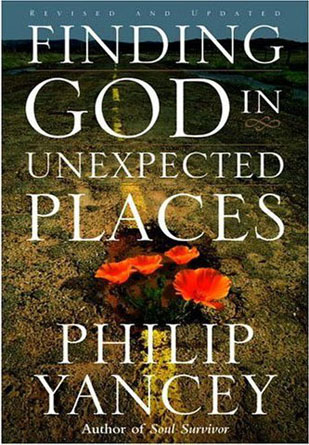
I hope you might be encouraged to look around you and find truth in unexpected places. If it is true, God is its author, and as His children in this culture, sometimes the truth can be blurred of hard to find, but it is there for those who work to pull it out! For more on this, I recommend Philip Yancey’s book Finding God in Unexpected Places. While he might not have a chapter on bumper stickers, you might be surprised where you find Him outside the walls of the church!

25 June, 2010

Drunk as a Christian

For the grace of God that brings salvation has appeared to all men, teaching us that, denying ungodliness and worldly lusts, we should live soberly, righteously, and godly in the present age.  Titus 2. 11-12 [NKJV]

No doubt; many of you will take note of this article’s title and be curious as to its contents. Not wanting to offend, I sought to word it as delicately as I could, but the purpose of this article is to spur each other on to love and good deeds (Hebrews 10. 24) in the context of Canadian culture, and I could find no better title.

As we look around at the Church, I’m afraid many of us are under a less-than-healthy influence. are you living as a drunk Christian?

Once you’ve gotten over your initial shock, I want you to think about it for a moment: We have all known a drunk person. We have all heard the word “sober”, and we ususally define that by what it is not: drunk! Well, what are the characteristics of one who is drunk: they’re not themselves, intemperate, they’re unbalanced ~ physically, mentally and chemically.

When was the last time you felt your faith and the culture around you were in balance? Admittedly, the culture is far and away an enemy to our faith. However, as you live in it ~ the seemingly unattainable ‘in but not of’ ~ have ever you struck a sense of balance between your love of God and your love of People. If these indeed are the most important commands for our Saviour, they need to be pretty essential for us as well. Granted, even when we’ve balanced them, at times it is only possible to maintain it a little while before something shifts and we’re off-centre again. Seldom, if not never, can we plateau.

This is the crux of a great book by author Kary Oberbrunner entitled The Journey Towards Relevance. He spends several chapters looking into our co-existence with the culture and uncovers our tendency toward ‘drunken faith’. In chapter nine Kary says “I think the major reason believers fail to integrate their faith with their culture is because they’re experts in culture and novices in faith.” [Page 126] That, I feel is where we go astray.


I’d like to get back to the passage from Titus which started this article. God has indeed appeared and shown us how we ought to live, making an example in the person of Jesus of how to fully love God and love others. The grace of God is a teacher, teaching us how to say “NO!” to the world’s ungodliness and lusts. It also is sufficient to teach us how one lives ‘soberly’, righteously, and godly in this culture. That word ‘sober’ we have already looked at above, but some other words can be put in its place (as have some translators of scripture). Sensibly [NASB] self-controled [NIV] wise [NLT]. Now, with some of these synonyms, do we not have a much clearer picture of the life of balance God intends for us?

But what if you don’t know what that grace is teaching us? We gladly espouse the truth of 2 Timothy 3. 16 & 17, but do we consult it when seeking to live life, make choices, or decide what to deny and what to embrace? Really? We know it is easier to talk about faith and culture than to actualy do something about it. Let’s fight the imbalance and get to know this Grace that appeared and sit as its student so we will know how to live relevant lives, truly loving God and loving others.

20 April, 2010

Press the 'Ctrl' Key on Technology

A machine in Switzerland that can replicate the Big Bang has started spinning. Talk-radio hosts take calls about how, in less than 200 years, computers and the internet will have surpassed humans and “have a mind of their own”. It seems technology is taking over.

Maybe it already has. A recent survey amongst teens shows televisions, iPods, screens, and wires are everywhere in their home, school, and social places.

Rest assured, “War of the Worlds” is not inevitable; spaceships will not come down to replace us with PCs and Macs. The Matrix does not exist! While these concepts from the news and films are far-fetched and provide entertainment, let us think about the place technology already has in our lives.

A question: What does the term “technologically devoid” mean to you? Is it a positive thing?

Contrary to popular thought, the Amish don't see anything particularly wrong with technology. They will use it in their barns, but do not let it into their homes. "Technology destroys the kind of family-life God intended us to have naturally."

CONSIDER: Technology changes life's rhythm as we sleep in, stay up late, and allow all sorts of unnatural influences into our homes.

As a result of technology:
  • We seldom get 8 hours of good sleep.
  • We sometimes expose ourselves and others to values that often shock us.  
  • We have new modes of transport and communication that have pushed us further away from each other (we are the most connected generation, but don’t know how to talk to our neighbours) and seduce us into going places we shouldn't or entertaining people and ideas we're better off ignoring.

 Some technology can start out right and end up wrong.

Who’s in control? Is there too much technology in our lives? Should we unplug sometimes? Some examples: Has the phone or a programme interrupted us from living with the people around us? Are our life problems solved in an hour as humorously and efficiently as in primetime? Television can set up an unhealthy and difficult standard we can’t match.

Perhaps you feel a little attacked. Maybe you won’t read this article because it’s not posted online! Let me offer some resolution:
Limit computer or television intake as a family. Lobby for shows and applications to make the cut; analyze your reasons through a Christian worldview, then scrutinize it and talk about what you just saw.

Use call answering as a filter. Some technology is a blessing, especially if it protects us from technology. With call display and voice mail, you choose when you allow disturbance into a life lived with significant others.

Take control!

A balanced use of technology is necessary, so that it serves us and not vice-versa. This is not un-Christian or dishonest, and you can still be culturally cool without all this technology and media influence. Christ always found ways to deal with everything important while minimizing distraction and interruption. We are challenged to do the same.

My advice: Check out your church library.  Borrow a book or movie, something to improve you or your family. Better yet, do something together as a family. Spend some time everyday being “un-plugged”.

17 March, 2010

St Patrick: separating the man from the myth.

Just in time for what is usually an annual beer-fest and pseudo-Irish celebrations, I thought I would shed a little light on the patron saint of the emerald isle.
The following video is a nice place to start: http://www.youtube.com/watch?v=6TCB5QhHVJA
However, if you'd care to read it, the following is a paper I wrote on St Patrick:

Every March 17th, in cities and towns across North America, people flock to the nearest Irish pub, dressed green all over, trading their nationality for an Irish one just to enjoy a few pints of green beer, watch a parade, and sing ‘O’ Danny Boy’ to honour a saint some 1,500 years ago.


St Patrick is one of three of the most popular of all saints; recognised world wide along with St Nicholas and St Valentine. However, his character and story, as with Nicholas and Valentine, seem clouded in mystery and fable. Mythopoeia in nature, stories of his chasing snakes from Ireland and using a shamrock to explain the Trinity come out every March 17th as the world celebrates his feast day. It will be the intent of this paper to uncover the true St Patrick and explain why he is worthy of remembrance and admiration.

In order to learn about and better understand the man behind the myth, one must ask several questions of the subject. Using his only surviving writings and works from specialists in Celtic history and the Irish church this paper will discuss several aspects. a) Patrick’s personal background and history. b) Who Patrick was as a person and his theology. c) What he did for Ireland and the Church during his time. d) How he has become known and why. e) Lastly, a consideration of the importance and impact he has for study and life in the Church today.

Realising the unknown about the past and the fact this ‘saint’ was human, different perspectives are taken into account. After such an evaluation, it should be clearer who this fifth century saint was.

Fortunately, for the student of St Patrick, he has written somewhat of an autobiography in his Confession. Discussion of this work develops later, but to address it now for some introductory information is helpful. The exact place and time of St Patrick’s birth is something unknown with certainty. However, the evidence from his own writings suggest he is born near the village of Bannavem Taburniae , but it is not precise and has no modern day equivalent. It can be said that he was born in Britain in what is perhaps now Wales, but noting in the fourth century it was a Roman Britain and very much not what is understood as the Britain of modernity. The best argument for a date sets it between the years 387-90, though some historians put it much later. He is born to parents Calpornius, a deacon, and Concessa his wife. His given name, ‘Patricius Magonus Sucatus’ honours the customs and relationships of the time . What his life was like during his first 15 years is the realm of conjecture, but Patrick does allude to being brought up in a well-to-do lifestyle where the religion of his father as deacon and grandfather as priest was not truly known to him (Conf. 1). Other commentators and biographers will draw from Irish Annals and the like what is known about his father or that time, but due to Patrick’s silence, not much is certain. In his Confession He speaks of only one unknown sin committed in an hour when he is 15, an act he privately confesses to a friend, and then says nothing until his kidnapping when he is 16.

It is this kidnapping along with thousands of others that Patrick attributes as God’s punishment for his lack of faith and obedience to Him (Conf. 1). Not much is known from his works about all that happened in his captivity, but we can deduce he was made to work for King Neill at herding sheep and spent long days and nights alone.

This captivity is crucial in his life. It is a time when God does a work in his heart and mind. Patrick tells us how, with so much time alone with his thoughts, he would pray hundreds of times a day and night, as God opened his unbelief and showed him his sin and His salvation. The captivity lasted approximately six years until he had a dream and heard a voice telling him that he must escape and return to his homeland. Boarding a ship, he made the long trek home.

Patrick’s escape was an adventurous time. He helped his shipmates when the food was gone to pray to God for provision. An approximate chronology of events from his escape, (411) to the time when Patrick is consecrated as Bishop (432) covers time at Lerins before getting back to Britain. Then there is study at the monastery in Auxerre where he is ordained. It is at Auxerre where he spends several years as deacon before he is sent to Ireland by Germanus, (a bishop) . Seeming to fast-forward several points, Patrick comes to Ireland through a calling from God (Conf. 3).

He does not come to a land without any Christian influence already there. Palladius is first sent to Ireland as Bishop, but was killed after one year of mission. It is important to know Patrick built upon the existing, weak Christian church. Patrick came not to battle heresy or Pelagianism, but to further the Church of Rome. As a result of his work, Ireland came into connection with the rest of the Roman Empire and made part of universal Christianity. He helped to convert more of the west than was previously reached, something that would otherwise have failed in Ireland due to paganism’s predominance. As well, he helped to organise the existing church, secured its permanence, and introduced Latin along with Roman culture, literature and ideas to the Irish, which allowed them to eventually increase their worldview and status in the world.

Many of the stories perpetuated about Patrick’s work in Ireland are either untrue or unreliable. There is not a mentioning of teaching the doctrine of the trinity through using a shamrock, nor is there report of chasing snakes out of Ireland. Surely if he had done so, he would have written of it himself in the confession.

Most of his ministry in Ireland is understood from the perspective of a biographer or, in the case of Patrick’s earliest accounts, save his own writings, hagiography. Muirchu and Tirechan of the 7th and 8th centuries are the first men to write a ‘Life of Patrick’ but have both been found unreliable. Patrick’s efforts seem to have good affects and be unchallenged, but some event originating in Britain brings controversy to Patrick’s life and gives purpose for his writing his two major works. No one can say when the event occurs, but late in his ministry, the prince Coroticus came to the Irish coast and ruthlessly raided many of Patrick’s recent converts. Patrick writes a strong letter of rebuke to the man who murdered his converts and seeks to save the ones that are still alive. The letter has a similar tone as his later work, the Confession, in that there is much in he way of defence and theology explicit throughout. He urges Christians to shun those having to do with the atrocity; he seeks repentance from Coroticus and excommunicates them who carried it out.

The Confession is primarily an apologetic, but the reason given by Patrick himself is that it is to render thanksgiving to God for His hand in Patrick’s life. Agreement across the board by all biographers is that Patrick writes as one who knows his Bible, the Latin Bible, and his lack of knowledge with literacy and rhetoric is obvious in his writing of these works. At times he will simply quote scripture at the risk of overstating his point simply because he will rely upon it for wording and communication. At times, it is to express his authority as bishop. Notwithstanding, Patrick’s humility comes though on every page as he speaks of his lowly state and position before God and how unlearned he is. As for the popular ‘Lorica’, or ‘Breastplate of St Patrick’, it is wrongly recognised as his. Due to its dating centuries after Patrick, the Latin used is also unlike the raw Latin of the Confession or Letter.

Patrick has greatly influenced the church through his acts of holiness and leaving behind his two small works. The importance of studying him today is due to his openness within those works; we feel we can truly know him because of his frankness. It can help us to understand Ancient Christian Britain and we are able to see character in his humility, the shortcomings that he does not hide, but pursues God’s call all the same. We can follow his journey as a young boy kidnapped, serving his master, escaping back to his homeland and returning as bishop to his captors eventually giving his life to them as he establishes God’s Kingdom there

Patrick died in 461 in Ireland in the county of Saul, though he longed to return to the church he founded in Armagh to rest. A man of integrity, compassionate to the people he ministered amongst; his story is one of inspiration. Fortunately, he left behind an imperishable memorial, his Confession, helping separate man from myth.


SELECTED BIBLIOGRAPHY

Bury, John B. The Life of St Patrick and His Place in History. Mineola, NY: Dover Publications, Inc., 1905

Cathcart, William. The Ancient British and Irish Churches: Including the Life and Labours of St Patrick. Philadelphia: American Baptist Publication Society, 1894

Chadwick, Nora K. The Age of the Saints in the Early Celtic Church. London: Oxford University Press, 1961

Gallico, Paul. The Steadfast Man: A Biography of St Patrick. Garden City, NY: Doubleday & Co, Inc. 1958

Gonzalez, Justo L. The Story of Christianity Volume 1: The Early Church to the Dawn of the Reformation. New York: HarperCollins Publishers, 1984.

Hanson, R.P.C. The Life and Writings of the Historical Saint Patrick. NY: Seabury Press, 1983

McNeill, John T. The Celtic Churches: A History, A.D. 200 to 1200. Chicago: University of Chicago Press, 1974

Olsen, Ted. Christianity and the Celts. Downers Grove, IL: Intervarsity Press, 2003

Vann, Father Joseph, ed. Lives of Saints. New York: John J. Crawley & Co., Inc., 1954.

11 February, 2010

Deception, Trickery and Other Popular Forms of Reaching Out.

C.S. Lewis writes:  
"Even in literature and art, no man who bothers about originality will ever be original: whereas if you simply try to tell the truth (without caring twopence how often it has been told before) you will, nine times out of ten, become original without ever having noticed it."
I believe he is right.  For years when I started out in this ministry, I thought I had to repackage and re-invent things so I could be just as effective and popular as the next guy.  I was frequently trying to put my own spin on things so I might appear clever or original.  I have discovered now that as I try less and give to God more, all the while being honest with what I offer Him and others ~ no strings attached ~ God blesses it and it does become original enough to strike someone in a way they hadn't thought of before.
I agree with another great philosopher in saying that "there is nothing new under the sun" and that our message is a couple millenia old, but one would be surprised at the constant effort made to soft-soap, water-down or manipulate the message ~ or others ~ in order to be effective in conveying it.
Example: Come out to this really fun event with pizza, friends, music and games ... then once we've lured you in we'll hit you with the Gospel!  Be my firend so I might have an opportunity to share this tract with you. 
I think authenticity and consistency in living a message of reconciliation and redemption is the most effective and truly God-ordained method of outreach.
People can see through slick programmes and projects, rallies and tracts are declining in results (even using that word I cringe, because that is what it has become: results driven); we've done them for years and they are becoming increasingly inefficient. 
Now that I have said so and effectively "thrown down the gauntlet", please pray for me to be consisent and authentic "as I go". And read Paul's thought and defence here: I Thessalonians 2. 3-5.

27 January, 2010

Tickets to the Superbowl

Sometimes I listen to the local Christian radio on the AM dial, and I enjoy it, but once in a while they'll give the microphone to some 'kooks'.
A few times I have heard this fellow during a particular programme through the afternoon and he is one of those guys you need to take with a grain of salt. Well, today I was listening but the shaker emptied real fast ...
He was on about tickets to the up-and-coming Superbowl and likening the attendance of the event ~ even claiming the ticket ~ to gaining entrance and the experience we shall have in Heaven. Now, I agree; the anaology of Christ being our ticket to heaven and everyone needs a ticket to get in is great. But it ends there. The rest of his analogy is faulty! First off, the tickets are sold for the most part and we can NOT purchase or earn our way to Heaven. Secondly, [depending on your view of election you may agree with this] the tickets and availabilty are only for a limited number of folks. Nonetheless, there are levels of enjoyment at the Superbowl that we do NOT have in Heaven, which he said we did! i.e. watching it on television in the bar, from the 'nosebleeds' , from the 50-yard line, some from the press-box and others with "meet the players" passes. I'm sorry but the analogy breaks down a few seats ago!
What does one do with statements from Paul about "seventh heaven" and all that? Perhaps there is somthing there to discover. However, I do not feel our local show host this afternoon has it figured yet.
My only thought to all of this is it is not empowering, not hopeful, and it makes me feel more like I'm in 18th century class-society Britain than a resident of the Kingdom of Heaven. He continued to say it will be that some are to enjoy special company with the saints in Heaven in their mansions, while many simply can expect a meager living in our shack, hoping to catch a glimpse of the millenial banquet on the divine plasma.
I will agree with something he mentioned about the spiritual fruit in our life indicating our following Christ and it indicating reward, to an extent, but I know that some of the Bible's heroes did some pretty 'shack worthy' things while they were here. When I hear people go off on the "classes of heaven" I just wonder if they'll be up as high as they think.
For what it is worth; if they are right, and this rant is misplaced, then I conceed a shack in heaven is still world's better than anything we have here. If for no other reason but that Christ will be there, but so will all who follow Him. I wouldn't wish to be anywhere else.

18 January, 2010

Phos Hilaron and Allowing the Light Through

It is amazing the things one thinks while in the bath. Certainly, many people do their best thinking while alone in the bath for precisely that reason: they are alone, without distraction, and will be there, likely, for a while.

I had a "teachable moment" this morning in the bath with my son, (who is four years old and, as a result, is often permitted to interrupt my times in the bath if he needs to use the bathroom) who enquired as to why there was a small orange glimmer of light on the wall beside the sink. I had to think a moment, and then realised the plastic handle on my razor is orange and was picking up the light from the bulb above it. I then went into a lecture about the three stages of light allowances that I could remember from grade school:
  1. something transluscent allows some light to pass through it, (like the razor handle),
  2. something transparent allowed most or all light to pass through it,
  3. and something opaque does not allow any like to pass through it but will instead cast a shadow.
He was obviously amazed at Daddy's brilliance as he said nothing, flushed the toilet and left.

Undoubtedly some of you will look upon the title of this blog with some familiarity, but many will scratch their head and wonder if I've mispelt something. I have stolen the title from our most ancient hymn: [http://encyclopedia.tfd.com/Phos+Hilaron]  I steal it because I feel it aptly names the concept I discoverd in the bath.

Once my son had left I rejoined my thoughts which mingled with the recent exploration of grade-school science. How transparent was I, and what Light is passing through, if any? Of course, you may now have put together I am talking about Christ, the Light of the world, or, the Gladdening Light "phos hilaron".

As we live and breath, as we go about our business, as we respond to the world around us, do we allow some of that light to pass, all of it, or are we spiritually opaque?  There has been much written on such a topic, challenges given by many much more capable than I, but I hope to simply get you to do some self-evaluation (2 Cor 13. 5).  I know I left the bath that morning a cleaner man on both the in and outside.

Something for the "think-ubator"

11 January, 2010

God Put a Smile Upon Your Face

"Stop your anger! Turn from your rage!  Do not envy others - it only leads to harm" Psalm 37. 8 NLT
In an event of divine coincidence, I found myself experiencing stress while reading this verse and listening to a CD in the backround.  On thier sophmore effort, Coldplay has a song by this title. While the message of the song is more humanistic than the Psalm, I found the message to be similar and was encouraged almost overwhelmingly. 
We should not be sad, angry or worried about anything because our God has things under his control. He has indeed put a smile upon our faces; wearing it is testimony to His strength in our life and not a naive "head in the sand".
Smile today with the smile God gave you :)

07 January, 2010

The Gospel of Candyland

Once again this week I found myself in another "teachable moment" with my son.
One of his favourite games lately is the Milton Bradley boardgame he received for Christmas, the pre-school hit who's original players would now play it with their grandchildren: Candyland. I don't know much of its history, and the story-line as it is printed on current editions of the game's box liner make no mention of it, but it sure has some Christian allegory to it. Let me explain.
As I started out saying, I had a teachable moment with my son this week; while playing the game for the dozenth time, he asked me why the liquorice tripped us up and why it was there. (if you are not familiar with the game, more of its premise will become evident as this blog continues.)
He is very good at the game and excited by it ~ he can play it several times in one sitting without tiring, unlike his father.  I tried to answer him to the best of my ability and found something interesting developing in my explanation.  We move our players (represented by gingerbread men) along a brightly coloured trail on our way to the celestial city of Candyland.  Along the way there are various "sticky spots" where Lord Liquorice has left traps for us to slow us on our way, (resulting in a missed turn).  My nutshell explanation was this:

Candyland = heaven; the King is GOD; Lord Licorice represents Satan and, therefore, the liquorice he leaves around on the path is the tempting, candy-like trip-up on our way to Candyland like sin.  Lord Licorice was himself a resident of cnadyland at one point, but was put out when once he felt he should have a greater position in the Kingdom.  Failing to comply with the demands, he now hides out in the forest hating the King and anyone who seeks to visit him.  So, possessing still some remnant of his time in Candyland, he uses pseudo-candy to throw people off the trial and slow their arrival.

My son was tracking along nicely and I found a way to once again see the Truth of God around me in everyday things.  I believe he enjoys the game on a deeper level now and I was able to help ensure our families commitment to Deuteronomy 6. 7.

14 December, 2009

I Want, Therefore I Am

I have read somewhere the phrase "Happiness is wanting what you have, not having what you want". What a great statement; There is a tonne of want and materialism amongst youth and society, and no more is this prevalent than during the “holiday season of giving”.[1] Though I do not know if it all stems from one place, I know we did not get there innocently. In writing this I consulted a few books to help create an informed answer, but I found the best advice was borne of personal experience, so here is my humble insight on the subject:

First, there is nothing wrong with either having things or simply wanting them in and of themselves. However, pride and envy often creep in and it becomes a sport. If you find that all you can think about is "the next big thing", or what else you can get that your friends do not have, maybe some self-examination is in order:

  • What's wrong with what I have?
  • What was I like before I had it?
  • Why do I want it...

- To compare to those around me?

- Perhaps true happiness is one more purchase away?

- Maybe people will be impressed with what I have?

- 'Retail Therapy' is comforting.

- Possessions = Love

I know many of us struggle with wanting more - and yes, I said 'we': me too - but the fact of the matter is this trend of ‘get’ until we either find ourselves in debt with lots of stuff, or still wanting and unhappy with stuff we have is destroying us from the inside out.

This is a huge deal! I am not a financial expert, but I know this much: Contentedness is more valuable, longer lasting and self-valuing than ‘having’ any day. I believe Paul would leave us with the same encouragement.[2]

Greg Laurie has given these insights:

  1. Watch how and what you are storing.
  2. Keep your vision clear
  3. Don’t worry for material things, (Matthew 6)
  4. Put God first in your life [to get the ultimate blessing]

Consumerism never saved anyone. Try appreciating what you have, you will see. Have a Merry Christmas and be content with what we have: A God who loves us enough to be one of us to save us from ourselves.

Agree? Disagree? I'd love to hear from you.


[1] This is a topic for another article all together – how political correction needs an enema.

[2] Philippians 4: 10-14

22 November, 2009

Character and Christian Chicken

Colossians 4:5-6 (TNIV)

“Be wise in the way you act toward outsiders; make the most of every opportunity. Let your conversation be always full of grace, seasoned with salt, so that you may know how to answer everyone.”

Writing on the maintainence of love and good deeds in the Canadian culture, I want to discuss how we do this in a Canadian institution; a place we are often on display. Somewhere where people are watching us and where we are often “just off duty”.

Many church-going families will end their Sunday morning by spending the early part of their afternoon having lunch at Swiss Chalet. Also affectionately known as Christian Chicken, several of Oakridge’s own attend the post-service luncheons.

First, what is the general reception of Christians as more of us are becoming patrons on Sunday? Often the opinion is negative: They are pushy, demanding and/or arrogant. Impatient. Bad tippers! Some of the waitstaff at restaurants will avoid a Sunday shift simply because “that’s when the Christians come in.” Some of our brothers and sisters have been known to criticise the waitstaff that is serving them for even working on a Sunday ~ all the while making necessary that server’s employment since the Christian is there.

Happily, I will announce that we do not have that reputation; at least not at 1011 Upper Middle Road. I interviewed some of the waitstaff at the local Christian Chicken to see what they had to say about “our crew”.

Overall, we are discribed as “very nice, patient and friendly.” There were even some honourable mentions regarding a particularly nice, senior couple who share an anniversary with one of the hostesses and celebrated the occasion with a gift! We are generably generous with our tipping, and one particularly “handsome” family is number one in this area. Generally we are seen the same as “normal folk” but are particularly communal as we will often request to be seated together and can take up entire sections of the dining hall; a noticable difference that can, at times, make it difficult for the server to know where to serve the food and/or collect the cheque J. One particular action they witness, much to the surprise of the server each time, is the likelihood of one family covering the bill for another, anonymously. All of this speaks well for us as Christ’s ambassadors as we live and and eat before the Swiss Chalet staff.

As it regards our incarnational witness to the world around us, what is important is both the practice and development of character. I understand Paul in Colossians 4 to make a clarion call for a Christianity that is never off duty; letting the love of Christ permeate everything we do and say, no matter where we are. For further consideration, see Who You Are When No One’s Looking by Bill Hybels.

So, perhaps we’ll see you around Swiss this weekend. Remember; we’re being watched, and so far, we have left as good an aftertaste as the meal we’ve enjoyed.

29 October, 2009

The Aroma of God.

I had found my seat and made small talk with my neighbours for a bit until the show began. Ready for a good time, I looked forward to the concert seemingly oblivious to my surroundings once the lights went down and the music started.
I was sitting behind a woman at the concert that night, and as the first song finished and the second began, I found myself distracted by her perfume.
She was several years older than me, so it wasn't one of those predictable, cutesy scents out there endorsed by some celebrity who neither really wears it, nor does it smell good on anyone ~ they're usually just a variation of musky fruits and alcohol sold to teens for way more than its value.
No, it was a mature, intoxicating scent that wouldn't be ignored.
I was embarrassed by my attraction to the scent and its wearer. But I couldn't help but be diverted by it throughout the concert.
At the intermission, I found myself approaching her to enquire what scent it was ... I had to know the name of that which compromised my enjoyment of the show.
Something funnily coincidental, however, was the fact that particular night I wasn't wearing any [pleasing] scent, and I hadn't showered that day. This perfume made me keenly aware of my own stink :( so at the break I rushed off to put on some deodorant I had for emergencies in order to help make me similar in scent.
It was beauty, and I was not ... I wanted to be so.
In our day to day lives, you don't expect epiphanies to be visited upon you when you're doing something seemingly ordinary, but, that's what makes it an epiphany. You have to be prepared to have God interrupt you when he wants you to be aware of something. Especially when you're not expecting it; he loves to do it then.
All throughout the pages of our bibles, you can find story after story, accounts of men and woman who were simply living their lives ~ some good, some bad ~ and going about their business when God interrupts them; he makes them keenly aware of an insight or truth about himself that alters their consciousness, their perspective and patterns and they go away from the experience changed. Sometimes he may knock you off your horse and strike you blind, like Saul. He may choose to start a fire in nearby shrubbery, and then talk to you from it as you walk your sheep, like Moses.
Or he may use something as subtle as a scent; something that is within his will to manipulate to his glory in order that you and I are made keenly aware of HIM.
All tools of his grace to humanity; he may even use us as that scent to both change us and direct others to him so that he gets the glory.
How do you smell? Are you catching people’s attention or turning them off? Are people being drawn to God through you or being pushed away? Are you close to him, letting him show you where you really are and letting him fill you more and more ~ are you getting in his way? Are we being real in our depiction of Christ and what it looks like to be his follower?
Let him Speak into you, don’t analyse it. (this coming from a “bible studier”) Too often we complicate things; Jesus spoke in parable to common folk with surface meaning or generally understood, subtle sub-text, we don’t have to dig too deep to get it.
I hope we see how God works through us in order to bring others to him so that he might have the glory. That smells good.

01 May, 2009

Comparisons: Judgement Disguised as Motivation …

I have been preoccupied with being in my early-thirties lately [few of you will remember a television series from the 80's titles "thirty something"] and will celebrate another year of earthly existence in a few days, though it is nothign compared to the one I'll begin enxt year. I know, I am still quite young, but I am starting to feel my age … before I go too far here, let me back up and set this article up so you know where I am going with this.
Do you ever find yourself saying things like, “Why do they need to tell me the age of this guy in the news?” Why do we need to know how old people are? However, when I hear about people’s age, it makes me contextualise who they are and what they’ve done. When I was younger and looked at celebrities, people in my community, whomever, I would always put them on some sort of plain that I was not on. It is incredible the amount of ‘young people’ I would compare myself to.
As I have aged, I find myself passing the age of some of these accomplished people. I know you must do it too ~ it isn’t long before the sports star you idolised is ten years your junior. And while we are on sports stars, let me mention Michael Jordan: He was the one I idolised in my youth. Him along with other celebrities who looking back now were mostly in their twenties or late teens ~ a few even early thirties. While I still enjoy following some artists and such, many of whom are considerably older, doing some simple grade-school arithmetic I realise that for the majority of my heroes ~ and many celebrities today ~ I enjoyed their work in their twenties.
There are several sports stars or celebrities I currently enjoy who are in fact my age or, as is more often the case now, younger than me ~ and I am not old! The captain of my team, Toronto FC, is Jim Brennan; he was born a few short days before me back in 1977 and is a good looking average sized guy form Southwestern Ontario ~ the comparisons stop there: I have no chance of having his soccer skill or life experiences. I guess I have missed my window for true celebrity status and sport stardom. Oh well.
There is, however, one man I have looked up to as long as I remember who is the same age in all the stories we know about him and is younger than most of his followers, an age which I now find creeping up on me quickly. Jesus.
It only took him three years to change the world and save all of humanity, all accomplished by approximately the age of 33. I have done nothing close to that, nor ever will, even if I live to be 100 and work at it everyday with the vigour and stamina of an 18-year-old.
It is possible to compare yourself too much to other people in an attempt to either build yourself up, or tear the other down. Sometimes, it is to motivate you. The only comparison that really has any lasting influence and is of any true worth is the man from Galilee. As I slowly read and understand who He was, and I seek to be more like Him, and am slowly being made into His likeness ~ a little too slow for my liking most days ~ it comes as comfort to know that if I am faithful in being who He has called me to be, I am right where I need to be. Who cares what others say.
Now, if you'll excuse me, I think I'll go play some FIFA Soccer on the Wii and at least compete virtually amongst my peers :)
Galatians 6. 3-5

27 March, 2009

Lost in the Sounds of Separation

The hardcore christina band Underoath's new album title has me thinking of how our culture has us 'lost' afloat on messages of depravity in the media & its myriad sounds, particularly the song "we are the involuntary".  Below are the lyrics:
Just drifting along with the world
Every motion is paranoid and paralyzing
Give it up or give 'em hope
Let us all survive the wake
We, we're a race, a human race
Under the glass behind it all
Watch us crawl so fearfully
I might be wrong after all
But weren't we just so delicate yesterday
Sit back and think about it
Sleep it off, sleep on it
Come to, and make your motions
Listen up
There's a calling ahead
A desperation
A falling of man
We are all lost in the sound of separation
Hands in the air and love at our sides
There's gotta be something bigger
With the beating in our throats
And the tremble in our grip
This can't be it
I'll come up for peace
I'll come down for truth
I'll give in, I'll give up for you
The floors are shaking
And we've lost our step
Oh Lord, have mercy on us all

One must wonder what message is in the medium we let influence us.  As well, are we at fault in letting both salt water and fresh water play form the same source, (our iPods) what are we filling our heads and hearts with?  Fewer messages and worldviews are positve and uplifting anymore, much less God-centred.  I hope we can discern the difference.  If not, we truly will be lost in the sounds of separation.

24 October, 2008

It's a Small World After All

Let it be said that this generation is more global than any that has gone before: There is the internet, television, with its news shows, specialty channels and satellite options, countless newspapers, periodicals and the ease of travel. It is no wonder that the old song of the nursery comes to mind, "It's a small world after all". This is especially so with the contemporary teen. Even though many of them have not yet left the comfort of their hometown, they are whisked away, daily, by our global media. They don't need to visit England to see Big Ben: It's now a backdrop for their favourite movie or a computer desktop. Now, my head is not in the sand. I realize people have been able to travel vicariously through films and the like for years. However, what I am aware of is the seemingly small world in which we find ourselves today. It truly is a global village! 'Cosmopolitan' is not just a name of a drink or a magazine anymore. It's an adjective for the way we think, act and feel.

I was able to attend an address given by Stephen Lewis to students at Centre Wellington District High School one year and was amazed at what he shared. Mr. Lewis? address came as a climax to the school?s 'War, youth & peace' studies. The students were very 'aware' of the world events that were discussed. Shared stories were humbling to say the least. As a result, many of the students were stirred with compassion and were motivated to act. This brings me to my point: Action must always be valued over Awareness. On any given day in South Western Ontario, someone is suffering: lack of food, abuse, neglect, disease, etc. Now, if we take this information to heart, or tuck it away in the mental file cabinet, we are aware ~ albeit in a small way, but aware notwithstanding. On the other hand, if we take this information, let it percolate and allow it to work inside us ? as much as I believe Mr. Lewis had us doing during his address, we may feel an appropriate reaction ? Motivation. It is here that many of us go wrong. What should we do with our awareness?

I began the article with a statement that this generation is more global-minded than any that have gone before. This is an amazing resource that we must tap in order to see the world change. As the saying goes, "Think globally, act locally". This is a great, if sometimes an over-used sentiment. What a wonderful place to start: right here where we live! Right here where we can make a difference in the lives of people around us! We have sent a human into space, but often we are afraid to talk to our neighbours next door. Parents and teachers, talk with your students, and don't discourage their excitement or desire to change the world. It is part of a great time in their lives. It's natural! I happen to know of one Man in particular who tapped into the lives of 12 young people 2000 years ago and the ripple effects of their work are still going! Young people are not just the future. They are the ?here and now?! They are the present. If they can contribute anything to the world, let it begin here. It may not be easy, but in the words of a popular song, "Nothing worth having comes without some kind of fight". Our future is worth the fight.